
Colombia's new anti-deforestation law provokes concern for small-scale farmers
-
 Loading...
 - Daniella Chapman
- 11 Jan 2022
- 424 Views
- 0 Like
- 0 Comment
Last year, when Colombia’s parliament approved a reform of the nation’s environmental crime laws, the legislation received stark opposition from a surprising assortment of environmentalists, human rights activists and smallholder farmers.
The environmental crime bill, which went into effect in August 2021, tacks on longer jail sentences and heftier fines for five environmental crimes already in the penal code and creates six new crimes altogether. It covers a wide gamut of environmental offenses, from wildlife trafficking to fossil fuel pollution, and lays out specific provisions targeting the deforestation crisis, an issue that has been exacerbated by the reconfiguration of the armed conflict in recent years.
“The new law of environmental crimes carries fundamental tools for the fight against deforestation in Colombia, starting with the creation of deforestation and the financing and promotion of deforestation,” Juan Carlos Losada, the member of parliament who authored the bill, told Mongabay. “These are non-bailable offenses, meaning, we’re going to be putting the criminal gangs that deforest in Colombia behind bars.”
The new legislation is expected to bolster the government’s ongoing anti-deforestation efforts, primarily the flagship Operation Artemis, a military-led campaign targeting deforestation gangs that was launched in 2019.
But some environmentalists and human rights groups are waiting to see how the law is implemented, particularly as Operation Artemis restarts in 2022. They warn that if past military actions are any indication, the law is likely to be used against poor farmers living along the agricultural frontiers rather than the higher-ups that finance the destruction.

“It all depends on how [the law] is used. This will determine whether it is good or not,” Camilo Prieto, head of the Colombian Environmental Movement Foundation, told Mongabay. “If it’s used adequately, it can be used to go after the [deforestation] cartels. If it’s used against farmers and displaced populations, it’s mad.”
Deforestation is on the rise in Colombia. At least 171,685 hectares (424,243 acres) of forest were cleared in 2020, about an 8% increase from the year before and a 38% increase compared to 2015, the year before a peace deal between the government and the Revolutionary Armed Forces of Colombia (FARC) ended the decades-long civil war. The FARC was known to restrict deforestation in order to preserve the canopies that shielded its fighters from aerial detection. But old and new criminal actors who have taken their place have taken a different tack, profiting from destructive activities that are expanding the agricultural frontier.
At its core, the legal reform has reignited debate over how to effectively combat rampant deforestation while addressing impunity in cases of environmental crime.
Since its launch, Operation Artemis has deployed more than 23,000 members of the armed forces to capture criminal gangs operating in protected areas, such as nature reserves and national parks. According to official figures, more than 20,000 hectares (49,000 acres) of forest have been restored and 96 people have been arrested since 2019. Still, critics allege that many of those prosecuted are poor farmers who clear land for a subsistence living, not the intellectual authors of deforestation.
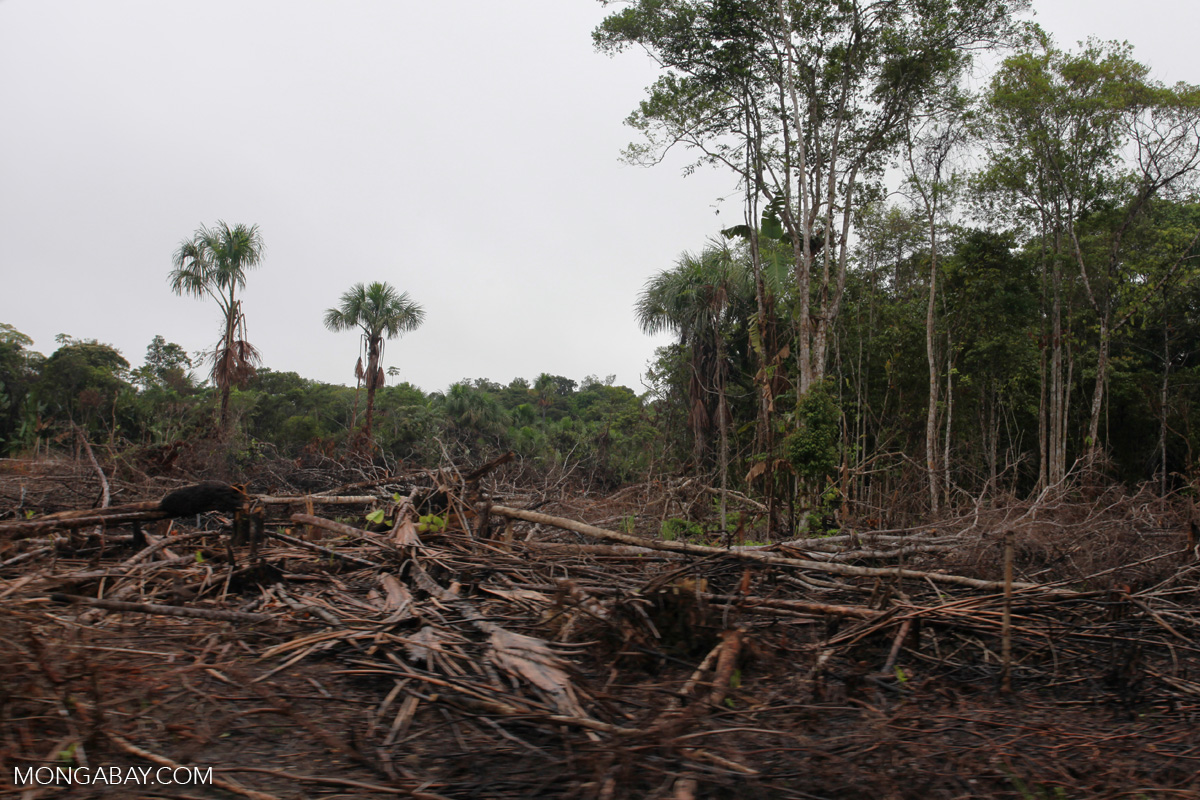
“We’re talking about rural people, people without land, poor, who depend on agricultural activities and cattle ranching to survive,” Jhenifer Mojica, director of Prodeter, a nonprofit that has worked with farming communities targeted by Operation Artemis, told Mongabay. “They are people who usually lack adequate legal defense and advice.”
Mojica said the crackdown on farmers could intensify under the new anti-deforestation legislation, which makes it a crime to clear more than 1 hectare (2.5 acres) of forest without approval from the authorities or in violation of norms.
“The new law aggravates penalties and creates new crimes, which means there are now three or four new options under which someone can be prosecuted,” Mojica said. Read More…